Piston Compressors
Piston (reciprocating) compressors are the oldest and most versatile type of compressors. They use a piston moving inside a cylinder to compress air.
Operating Principle
The piston compressor works through the reciprocating movement of a piston inside a cylinder:
Intake:                      Compression:
    ┌─────────┐                 ┌─────────┐
    │  Valve  │ ←Air            │  Valve  │ →Compressed
    │  open   │                 │  open   │  air
    ├─────────┤                 ├─────────┤
    │         │                 │░░░░░░░░░│
    │         │                 │░░░░░░░░░│
    │    ↓    │                 │░░░█████░│
    │  ═════  │                 │░░░░░░░░░│
    │ Piston  │                 │  ═════  │
    └────┬────┘                 └────┬────┘
         │                           │
      Crankshaft                  Crankshaft
- Downward stroke: Piston moves down, creating vacuum that opens intake valve
- Filling: Atmospheric air enters the cylinder
- Upward stroke: Piston moves up, compressing the air
- Discharge: When system pressure is exceeded, discharge valve opens
Types of Piston Compressors
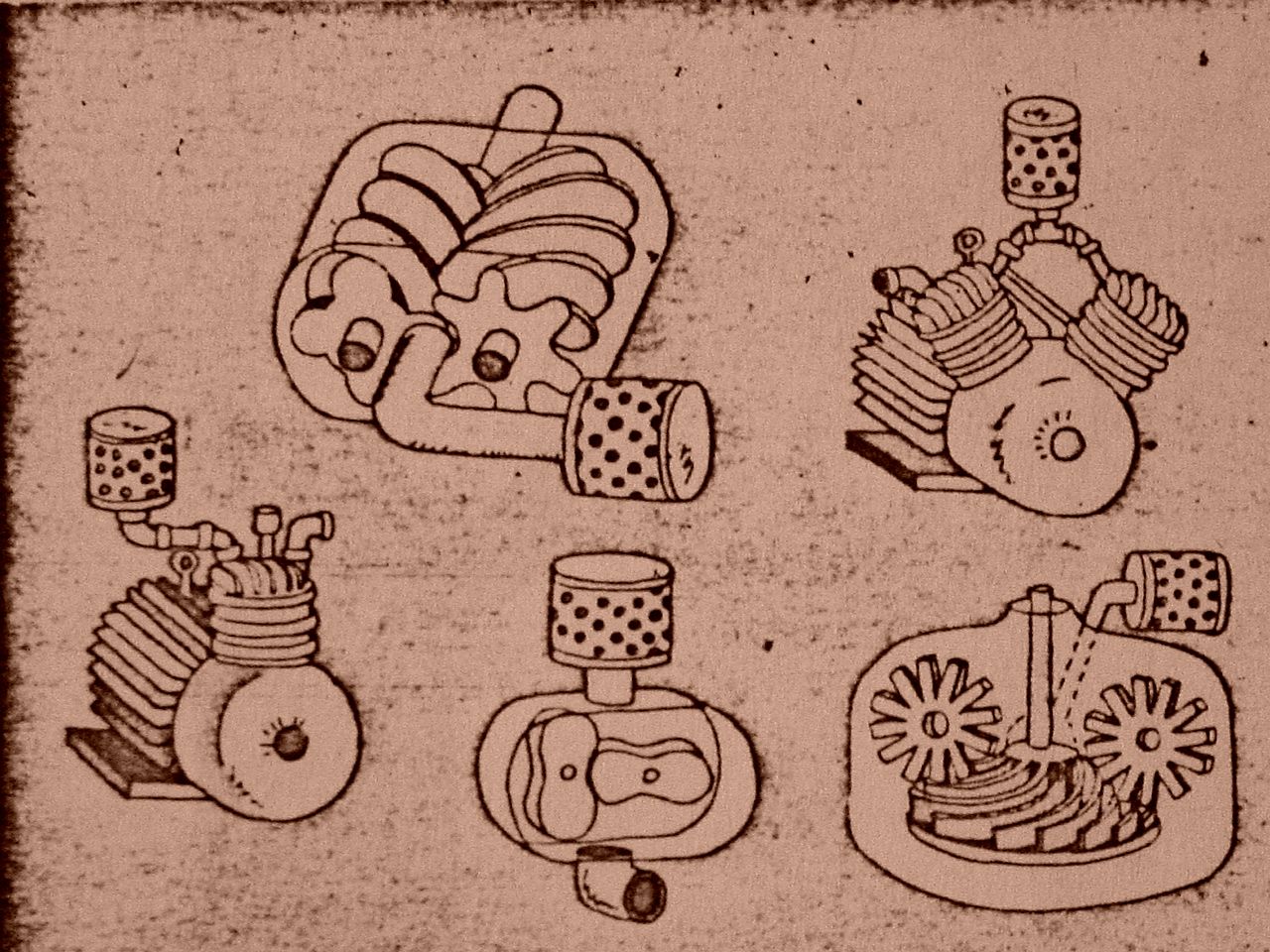 Various compressor designs: screw, two-stage piston, single-stage piston, rotary vane, and blowers.
Single Stage
- Compresses air in a single stroke
- Suitable for lower pressures (up to ~100 PSI / 7 bar)
- Simpler design
- Lower initial cost
- For intermittent use
Two Stage
- Compression in two successive cylinders
- Higher efficiency for high pressures (up to 175+ PSI / 12+ bar)
- Intercooling reduces temperature
- Better for continuous service
- Longer lifespan
Main Components
| Component | Function |
|---|---|
| Cylinder | Chamber where air is compressed |
| Piston | Moving element that compresses air |
| Rings | Seal the gap between piston and cylinder |
| Valves | Control air inlet and outlet |
| Connecting rod | Connects piston to crankshaft |
| Crankshaft | Converts rotation to linear motion |
| Crankcase | Contains lubrication oil |
Advantages vs Disadvantages
Advantages
| Feature | Description |
|---|---|
| Versatility | Wide pressure range (up to 6,000 PSI) |
| Initial cost | Generally lower than other types |
| Simplicity | Easy to understand and repair |
| Availability | Wide variety of sizes and capacities |
| Portability | Compact designs available |
Disadvantages
| Feature | Description |
|---|---|
| Pulsations | Non-continuous flow |
| Noise | Higher than screw or scroll |
| Duty cycle | Limited (50-60% typical) |
| Maintenance | More frequent than other types |
| Vibration | Requires solid foundation |
Ideal Applications
- Small workshops - Intermittent use, low cost
- Backup - When main compressor fails
- High pressure - Where screw can't reach (>175 PSI)
- Portable - Easy to transport
- Frequent starts/stops - Handles cycles well
Duty Cycle
Piston compressors have a limited duty cycle. A compressor with 50% duty cycle should not operate more than 30 minutes per hour. Exceeding this causes overheating and premature failure.