Compression Cycle
The compression cycle in a piston compressor is a four-phase process that repeats continuously.
The Four Phases
1. Intake Stroke (Expansion)
    Intake valve
       OPEN
         ↓
    ┌────▼────┐
    │ ░░░░░░░ │ ← Air entering
    │ ░░░░░░░ │
    │         │
    │         │
    │  ═════  │ ← Piston moving down
    └────┬────┘
         ↓
- Piston moves downward
- Pressure in cylinder decreases
- Intake valve opens due to pressure difference
- Atmospheric air fills the cylinder
2. Compression
    Valves
    CLOSED

    ┌─────────────┐
    │░░░░░░░░░░░░░│
    │░░░░░░░░░░░░░│ ← Air being compressed
    │░░░░░░░░░░░░░│
    │    ═════    │ ← Piston moving up
    │             │
    └──────┬──────┘
           ↑
- Piston begins to rise
- Both valves close
- Air is compressed
- Pressure and temperature increase
3. Discharge
    Discharge valve
         OPEN
           ↑
    ┌──────▲──────┐
    │░░░░░░░░░░░░░│ → Air exiting
    │    ═════    │ ← Piston at top
    │             │
    │             │
    │             │
    └──────┬──────┘
           ↑
- Pressure exceeds system pressure
- Discharge valve opens
- Compressed air exits to system
- Piston reaches top dead center
4. Clearance Volume Expansion
    Valves
    CLOSED

    ┌─────────────┐
    │░░░░░░░░░░░░░│ ← Residual air expanding
    │    ═════    │ ← Piston starting down
    │             │
    │             │
    │             │
    └──────┬──────┘
           ↓
- Piston begins to descend
- Residual air (clearance volume) expands
- Pressure decreases
- When pressure drops enough, intake valve opens
P-V Diagram (Pressure-Volume)
The compression cycle can be represented on a P-V diagram:
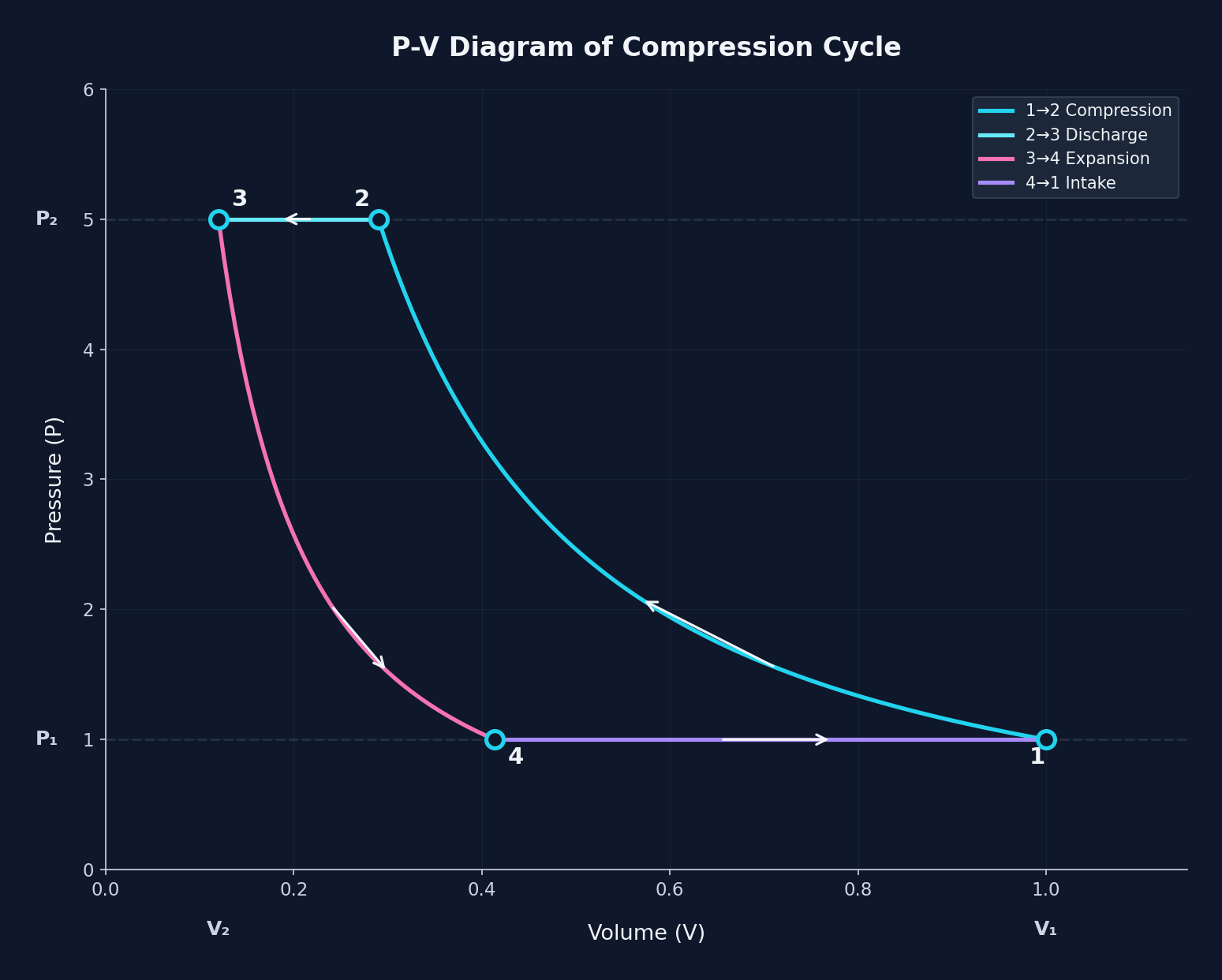
- 1→2: Compression (polytropic)
- 2→3: Discharge at constant pressure
- 3→4: Clearance volume expansion
- 4→1: Intake at atmospheric pressure
Volumetric Efficiency
Volumetric efficiency is the ratio between actual air intake and theoretical piston displacement.
Factors Affecting It
| Factor | Effect |
|---|---|
| Clearance volume | More clearance = lower efficiency |
| Compression ratio | Higher ratio = lower efficiency |
| Leakage | Losses through rings and valves |
| Heating | Hot air is less dense |
| Flow restrictions | Dirty filters, small valves |
Typical Values
| Compressor Type | Volumetric Efficiency |
|---|---|
| Single stage, low pressure | 80-90% |
| Single stage, high pressure | 60-75% |
| Two stage | 75-85% |
Compression Ratio
The compression ratio is the proportion between discharge pressure and intake pressure:
CR = P_discharge / P_intake
Practical Limits
| Stages | Maximum Compression Ratio | Typical Pressure |
|---|---|---|
| Single stage | 4:1 to 5:1 | Up to 100 PSI |
| Two stage | 8:1 to 10:1 | Up to 175 PSI |
| Three stage | 15:1 to 20:1 | Up to 500 PSI |
| Multiple | Up to 250:1 | Up to 6,000 PSI |
Discharge Temperature
Higher compression ratio means higher discharge temperature. That's why high-pressure compressors use multiple stages with intercooling.
Valves
Valves are critical components that control air flow.
Valve Types
| Type | Characteristics | Application |
|---|---|---|
| Reed | Simple, economical | Small compressors |
| Disc | Higher flow | Medium compressors |
| Concentric ring | High efficiency | Large compressors |
| Plate | Robust | High pressure |
Operation
Valves operate automatically by pressure difference:
- Intake valve: Opens when cylinder pressure < atmospheric pressure
- Discharge valve: Opens when cylinder pressure > system pressure
Valve Maintenance
Valves are the most common cause of efficiency loss. Regularly inspect for:
- Wear or deformation
- Carbon deposits
- Weak or broken springs
- Damaged seats